
Last updated September 22, 2026
Free written scope consultation - allowances, timeline, and change-order rules on paper before a single trade is scheduled

 Before
 After
After Before
 After
After Before
 After
AfterHow to Hire a Construction Contractor in Carlsbad: A Step-by-Step Guide
California’s CSLB license lookup takes 90 seconds and reveals whether a contractor’s bond is current, their workers’ comp is active, and whether any complaints have resulted in formal action. Yet fewer than one in five homeowners check it before signing. In Carlsbad, where coastal moisture, strict fire-hardening codes in the Rancho Carlsbad and La Costa Ridge areas, and permit backlogs of 4-6 weeks on major remodels create real project risk, that 90-second check is the difference between a documented professional and a liability you invited into your home. This guide gives you a verification process that takes about four hours total and filters out the majority of risk before any contract is signed. For The Complete Guide to Construction in Carlsbad and more guides & resources, see our blog. No pep talk. Just a checklist.
Quick Answer
To hire a construction contractor in Carlsbad, verify their CSLB license and bond status online, confirm active workers’ compensation coverage, request three written estimates with identical scope language, check references for schedule and cost variance (not just satisfaction), and review the change order clause before signing. The entire verification process takes roughly four hours and eliminates most high-risk contractors before you commit.
Table of Contents
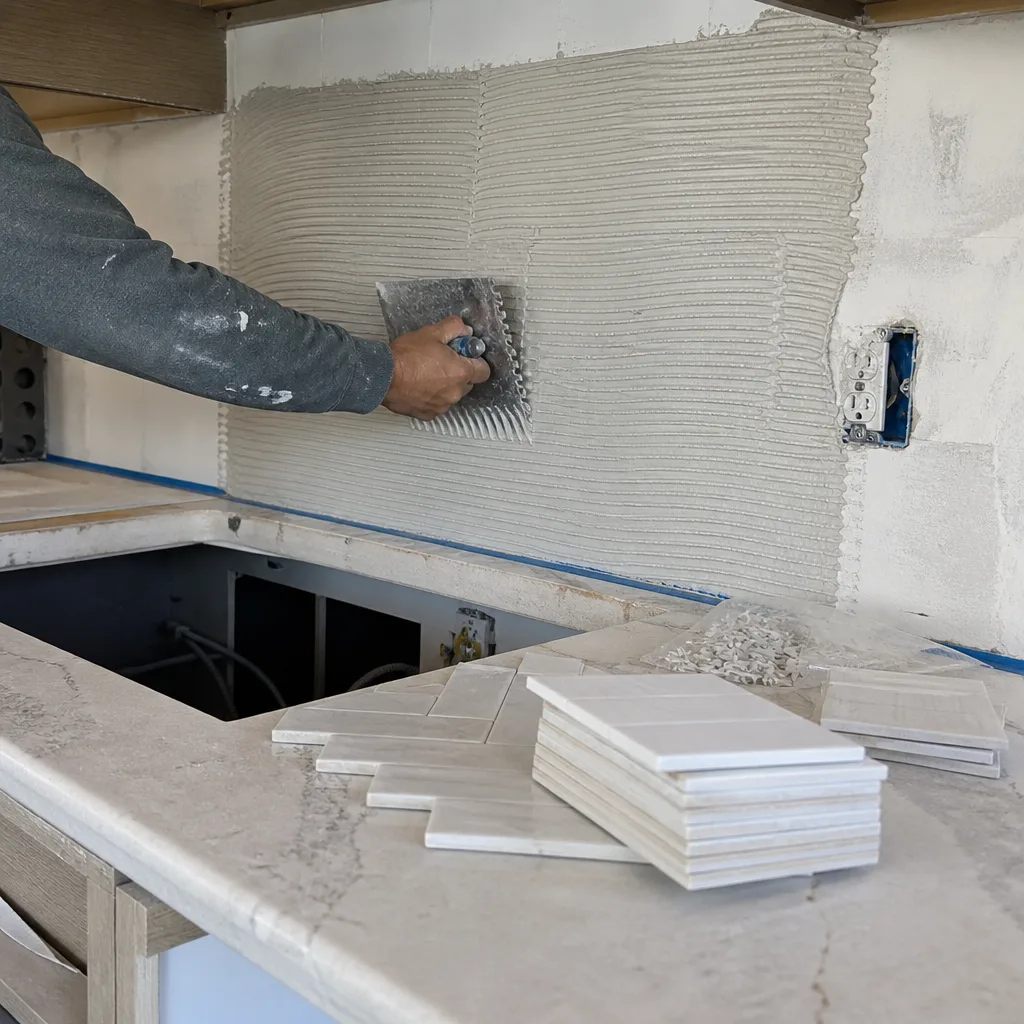
- How to Verify a Contractor’s License and Insurance in Carlsbad
- What a Legitimate Written Estimate Must Include Under California Law
- How to Compare Bids With Different Scope Language
- The Change Order Clause That Separates Professionals From Risk
- Reference Check Questions That Actually Reveal Risk
- Carlsbad-Specific Permits, Codes, and Climate Considerations
- Red Flags During the Hiring Process
- Common Mistakes to Avoid
- When to Call a Professional
- Frequently Asked Questions
BeforeAfterHow to Verify a Contractor’s License and Insurance in Carlsbad
Every legitimate contractor in Carlsbad holds a CSLB license, carries a $25,000 contractor’s bond, and maintains active workers’ compensation insurance if they have employees. Here’s how to verify all three in under 10 minutes.
- Go to cslb.ca.gov and select “Check a License.” Enter the contractor’s license number or business name. The search returns the license class (B-General Building, C-36 Plumbing, C-39 Roofing, etc.), the issue date, the expiration date, and the bond status.
- Confirm the license class matches the work. A B-General Building contractor can oversee projects involving two or more unrelated trades, which covers most kitchen remodels, bathroom remodels, home additions, and ADUs in Carlsbad. A C-class license is trade-specific. If you’re hiring for roofing in Carlsbad, the license should be C-39. For kitchen remodeling in Carlsbad, B-General Building or the appropriate C-classes for electrical and plumbing are standard.
- Verify the $25,000 bond is current. The bond protects you if the contractor abandons the job, fails to pay subcontractors, or violates license law. If the bond shows as expired or cancelled, stop here.
- Check workers’ compensation status. If the contractor has employees and workers’ comp is listed as “exempt,” that’s a red flag. In California, officers and owners can file exemptions, but crews cannot. If a worker is injured on your property and the contractor lacks coverage, your homeowner’s policy may be the next target.
- Review the complaint history. Look for “disciplinary action” entries. A single complaint that resulted in a citation is more informative than five informal complaints that went nowhere. Read the action details. Common violations in Carlsbad include contracting without a proper license class, failure to pay subcontractors (leading to mechanics liens on the homeowner’s property), and advertising without including the license number.
Save screenshots of all three verifications: license status, bond status, and workers’ comp. Email them to yourself with the contractor’s name in the subject line. If you need to file a complaint later, this documentation starts your paper trail.
In our experience across 4,000-plus projects, the contractors who resist providing a license number upfront are the same ones who resist putting the price in writing. Under Clause 1 of The Haven Standard, we provide our license status before any site visit, because documentation is not an extra step. It’s the first step.
What a Legitimate Written Estimate Must Include Under California Law
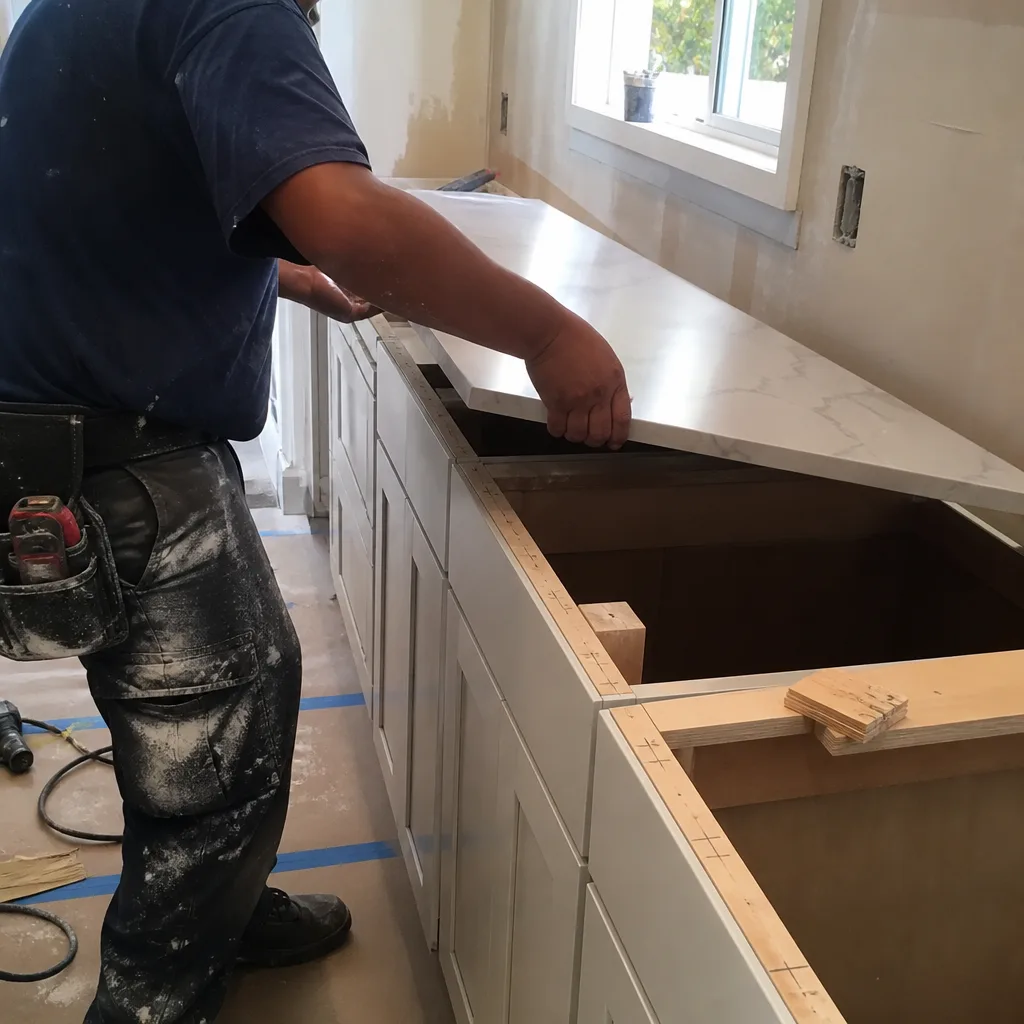
California Business and Professions Code Section 7159 sets minimum requirements for home improvement contracts over $500. Most Carlsbad homeowners have never read it. Here’s what the law requires and what three common omissions signal about the contractor’s future behavior.
Required elements under California law:
- The contractor’s name, address, and CSLB license number
- A description of the work to be performed and materials to be used, with sufficient detail to identify them
- The total contract price, including any finance charges
- The down payment amount (legally capped at 10% of the contract price or $1,000, whichever is less)
- The schedule of payments tied to completion milestones, not calendar dates
- A notice of the three-day right to cancel
- A start date and estimated completion date
- A notice about mechanics lien rights for subcontractors and suppliers
Three dangerous omissions we see regularly in Carlsbad:
- No line-item material specifications. An estimate that says “install cabinets” without naming the brand, line, and finish leaves the contractor free to source whatever fits their margin that week. In kitchen remodeling in Carlsbad, we’ve reviewed competitor quotes that specified “quartz countertop” with no brand, no thickness, and no edge detail. That single line could swing $3,000-$6,000 in actual cost. A legitimate estimate names the material or provides an allowance with a clear process for selection and any price adjustment.
- No permit responsibility assigned. California law does not require the contract to state who pulls permits, but absence of this clause creates the most common dispute we see: the homeowner assumes the contractor handles it, the contractor assumes the homeowner will, and work starts without permits. In Carlsbad, unpermitted work on structural, electrical, or plumbing triggers red flags on resale and can require expensive retroactive permitting. The estimate must state who obtains the permit, who pays the fee, and who schedules inspections.
- No change order procedure defined. This omission is the strongest predictor of final cost exceeding the estimate by 20% or more. We’ll cover the specific clause language in the next section.
At Rowan Construction Group Carlsbad, every estimate includes a written scope with line-item material brands (Kohler fixtures, Moen valves, Silestone or Caesarstone surfaces where specified), permit responsibility stated explicitly, and the change order process defined by reference to The Haven Standard. The price is flat. The scope is fixed. Anything outside the scope requires a signed change order before work proceeds. No exceptions since 2007.
How to Compare Bids With Different Scope Language
Three contractors bid your Carlsbad kitchen remodel. One quotes $48,000, one quotes $62,000, and one quotes $71,000. The $48,000 bid looks like a bargain. It is probably incomplete.
Different scope language creates phantom price differences. Here’s a normalization method that puts three estimates on equal footing.
Step 1: Create a master scope checklist.
Go through each estimate line by line and list every task mentioned, even if only one contractor included it. Typical Carlsbad kitchen remodel scope items include:
- Demolition and disposal
- Electrical panel upgrade or circuit additions
- Plumbing rough-in and fixture installation
- Drywall repair and texture matching
- Cabinet supply and installation (brand and line specified)
- Countertop fabrication and installation (material, thickness, edge profile)
- Backsplash tile and installation
- Appliance installation
- Flooring removal and installation
- Permit fees and inspection scheduling
- Final cleaning
Step 2: Mark coverage for each contractor.
Create a simple grid. For each item, note whether Contractor A, B, and C included it, excluded it, or listed it as an allowance (meaning the price is estimated and will adjust based on final selection).
Step 3: Identify exclusions that explain low bids.
The $48,000 bid often excludes the electrical panel upgrade, lists countertops as a $5,000 allowance with no material specified, omits permit fees, or excludes appliance installation. When you add the realistic cost of these exclusions back in, the “low” bid frequently lands within 5% of the higher bids. The difference was never real. It was just hidden.
Step 4: Normalize for material quality.
Two contractors both list “quartz countertop.” One is quoting a 2cm standard edge with a builder-grade brand. The other is quoting 3cm Silestone or Caesarstone with a waterfall edge and custom cutouts. The price difference of $2,000-$4,000 reflects real material and labor differences, not contractor markup variation. Ask each contractor to quote the same material spec, or add your own allowance adjustment to compare fairly.
Step 5: Add realistic allowance adjustments.
If a contractor uses allowances, apply your own research on what your selections will actually cost. In Carlsbad, Kohler fixtures through a plumbing supplier typically run 15-25% above big-box retail for the same model due to contractor markup and warranty terms. Factor this in.
After normalization, bids that appeared $15,000 apart often converge to within $3,000-$5,000. At that point, the decision factor shifts from price to process: documentation, communication, and the change order discipline we’ll discuss next.
The Change Order Clause That Separates Professionals From Risk
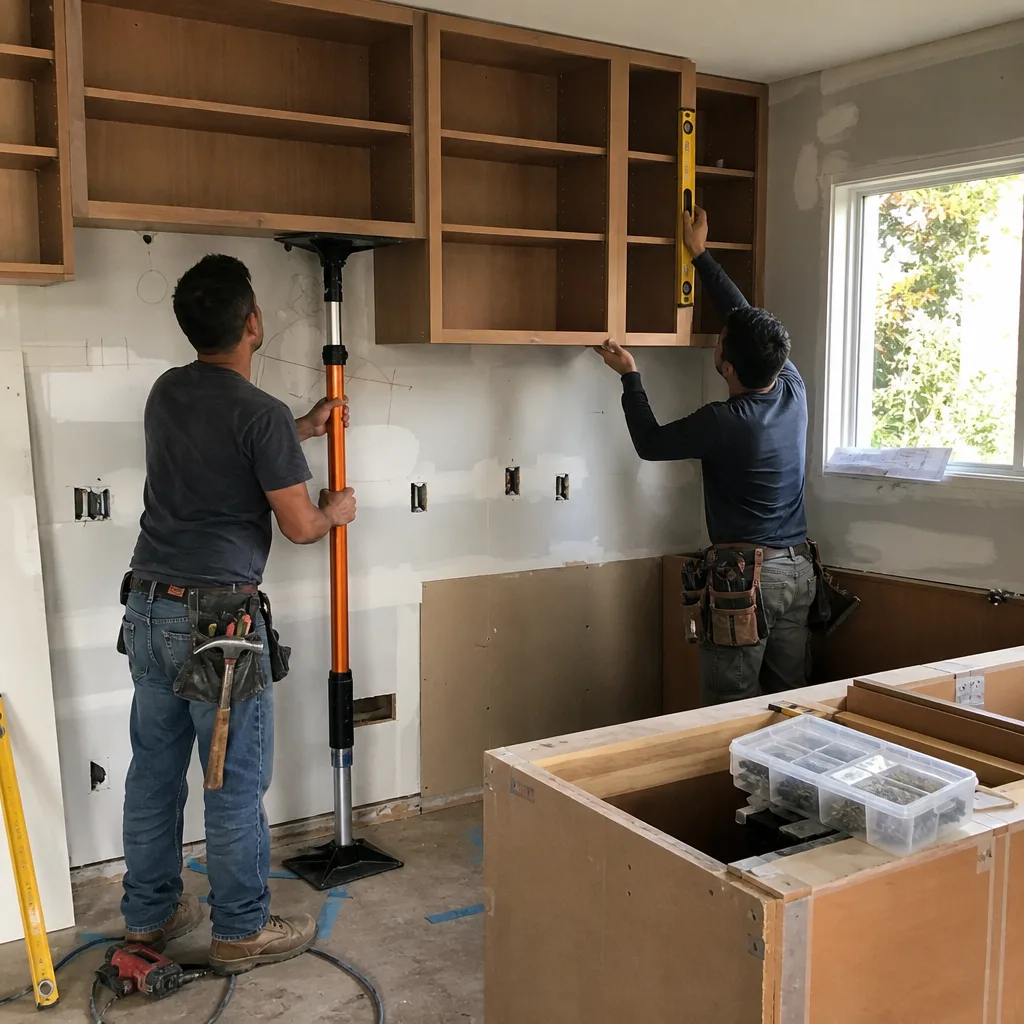
The average California home improvement project experiences 3-5 change orders. The difference between a project that finishes within 5% of estimate and one that finishes 25% over is not the changes themselves. It’s the process that governs them.
Here’s the clause language that separates contractors with documented process from those who add costs verbally mid-project:
Effective clause: “No work outside the written scope shall proceed until a change order is prepared, priced, and signed by both parties. The change order shall describe the additional work, the materials to be used, the additional cost, and the schedule impact. Work shall pause if necessary until the change order is executed.”
Defective clause (or absence): “Additional work will be billed at time and materials” or no mention of changes at all.
The defective version invites the most common dispute pattern: the contractor discovers “unexpected” conditions (always present in older Carlsbad homes in the Village and Barrio areas), performs work immediately, and presents a bill afterward. The homeowner has no opportunity to evaluate alternatives, no fixed price for comparison, and no documentation if the dispute escalates.
At Rowan Construction Group Carlsbad, no change proceeds without a signed change order. This is not a preference. It is the administrative discipline Haven acquired Rowan for, and it is the reason our projects finish within a few percent of the number the customer agreed to. The change order includes the same elements as the original estimate: scope, materials, price, schedule. The customer signs before work resumes. Every time.
When reviewing estimates, ask each contractor: “Walk me through your change order process.” If the answer is “we’ll figure it out as we go” or “I just bill you for any extras,” the final price is unbounded. If the answer references a written procedure with signatures required, you’ve found a contractor who treats your budget as a commitment, not a starting point.
Reference Check Questions That Actually Reveal Risk
“Were you happy with the work?” tells you almost nothing. Every contractor has three customers who will say yes. The questions that reveal risk are specific, numerical, and uncomfortable to answer if the project went poorly.
Ask these six questions of each reference:
- “What was your original contract price, and what did you pay at the end?” You’re listening for percentage variance, not absolute dollars. Under 5% variance with documented change orders is normal. Over 15% without clear documentation is a pattern.
- “What was your original completion date, and when did the crew actually finish?” In Carlsbad, permit delays on ADUs and home additions can legitimately push schedules. But the reference should be able to distinguish permit delays from contractor scheduling failures. Ask: “How much of the delay was permits versus the contractor’s crew availability?”
- “Describe a problem that came up and how it was resolved.” Every project has problems. The absence of any problem is a reference that hasn’t been asked directly enough. Listen for process: was there a documented resolution, a signed change order, a warranty call? Or was it “he just fixed it eventually”?
- “Did the crew show up when they said they would, and did you know who was on your property?” In our operation, crews are background-checked, uniformed, and identified in the photo record delivered after each visit. If the reference says “different people every day, I never knew who was there,” that’s a subcontractor management problem that creates liability and quality risk.
- “What documentation did you receive when the job was done?” A legitimate contractor delivers permits, inspection sign-offs, warranty terms, and a final invoice matching the contract plus any signed change orders. If the reference says “just a final bill,” the contractor’s documentation discipline is weak.
- “Would you hire them again for a different project?” Repeat business intent is the strongest signal. A customer who says “yes, but only for small stuff” is telling you something the “satisfied” answer conceals.
Call at least three references for projects similar in scope and value to yours. A contractor with strong ADU experience may be unprepared for a complex kitchen reconfiguration. A roofer who excels at tile roof repair may struggle with full re-roofing under current fire-hardening codes in Carlsbad’s wildland-urban interface zones.
Carlsbad-Specific Permits, Codes, and Climate Considerations
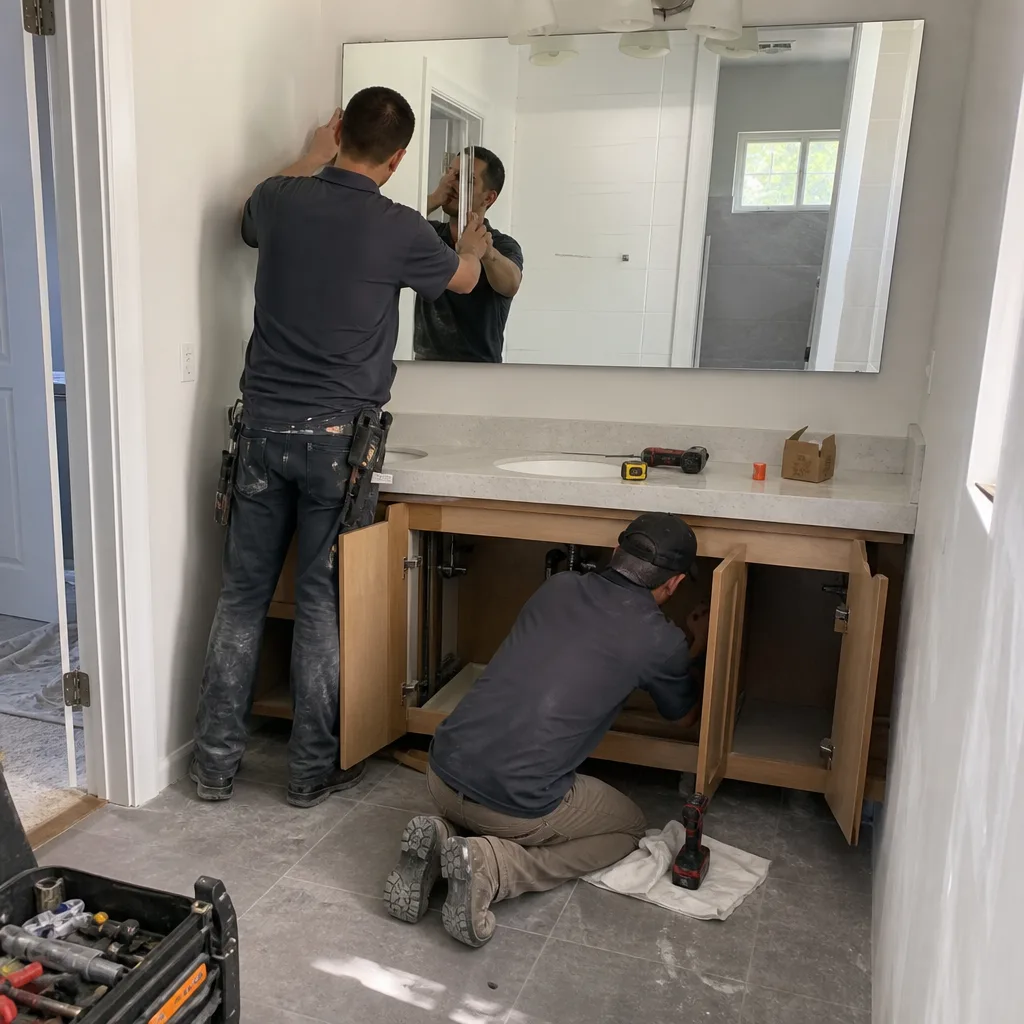
Carlsbad operates under the Carlsbad Municipal Code and adopts the California Building Code with local amendments. Several factors specific to this market affect contractor selection and project planning.
Coastal moisture and salt air. Homes within two miles of the coast, particularly in the Terramar and Carlsbad Village areas, experience accelerated corrosion on metal roofing fasteners, galvanized steel framing, and exterior hardware. A contractor bidding work on these homes should specify corrosion-resistant materials (stainless steel fasteners, copper flashing, marine-grade hardware) without prompting. If you have to ask, they haven’t accounted for local conditions.
Fire-hardening requirements. Carlsbad’s wildland-urban interface zones, including portions of La Costa and Rancho Carlsbad, require Class A fire-rated roofing, vent screens with 1/8-inch mesh, and dual-pane tempered glass in certain window replacements. These are not upgrades. They are code requirements that must be met for permit approval. A contractor who treats them as optional add-ons either doesn’t know local code or is pricing deceptively low.
Permit timelines. As of 2024-2025, Carlsbad’s Planning Division reports typical review times of 4-6 weeks for major residential remodels and 8-12 weeks for ADUs. Expedited review is available for an additional fee but does not eliminate the requirement for complete documentation. Contractors who promise permit approval in “a week or two” for major work are either misinformed or planning to start without permits.
Coastal Commission jurisdiction. Properties west of Interstate 5 or in designated coastal zones may require Coastal Development Permit review for exterior alterations, second-story additions, or significant grading. This adds 2-4 months to project timelines and requires specialized application knowledge. Not every Carlsbad contractor has experience with this process. Ask directly: “How many Coastal Development Permits have you obtained in the last two years?”
Soil and foundation conditions. Carlsbad’s geology includes expansive clay soils in the eastern areas and sandy loam near the coast. Foundation work, retaining walls, and hardscape installation require different engineering approaches. A bathroom remodeling in Carlsbad project in the clay zone may need soil testing for an addition; the same project in the sand zone may not. The estimate should reflect this local knowledge or include a geotechnical contingency with a clear trigger.
Red Flags During the Hiring Process
Some warning signs are obvious: no license, no written estimate, pressure to sign immediately. Others are subtle and specifically relevant to the Carlsbad market.
- Requests large upfront payment. California caps down payments at 10% or $1,000. A contractor asking for 25% or 50% “to secure materials” is either undercapitalized or planning to use your funds for another job.
- Offers to start before permits. In Carlsbad, this is particularly risky given inspection backlogs and the city’s active code enforcement. Unpermitted work discovered during sale can trigger required disclosure, price renegotiation, or retroactive permitting with associated fees and potential reconstruction.
- Provides estimate without site visit. No legitimate contractor can price a kitchen remodel, roofing replacement, or home addition accurately without measuring, assessing access, and evaluating existing conditions. Phone estimates or “ballpark” numbers based on square footage alone are not estimates. They are marketing tools designed to get a foot in the door.
- Cannot name specific material brands. “Grade A cabinets” or “premium countertop” without manufacturer and line is a blank check. In our written estimates, we name KraftMaid or Wellborn for cabinets, Cambria or Caesarstone for quartz, GAF or Owens Corning for roofing. The customer knows what they’re buying before anyone picks up a tool.
- Has no physical business address. PO boxes and residential addresses are common for small operators. They are also common for contractors who disappear when problems arise. Verify the business address exists and matches the CSLB listing.
- Pressure to decide “today.” Legitimate contractors in Carlsbad have backlog. They do not need your signature today to fill next week’s schedule. Urgency theatre is a sales tactic, not a business necessity.
Common Mistakes to Avoid
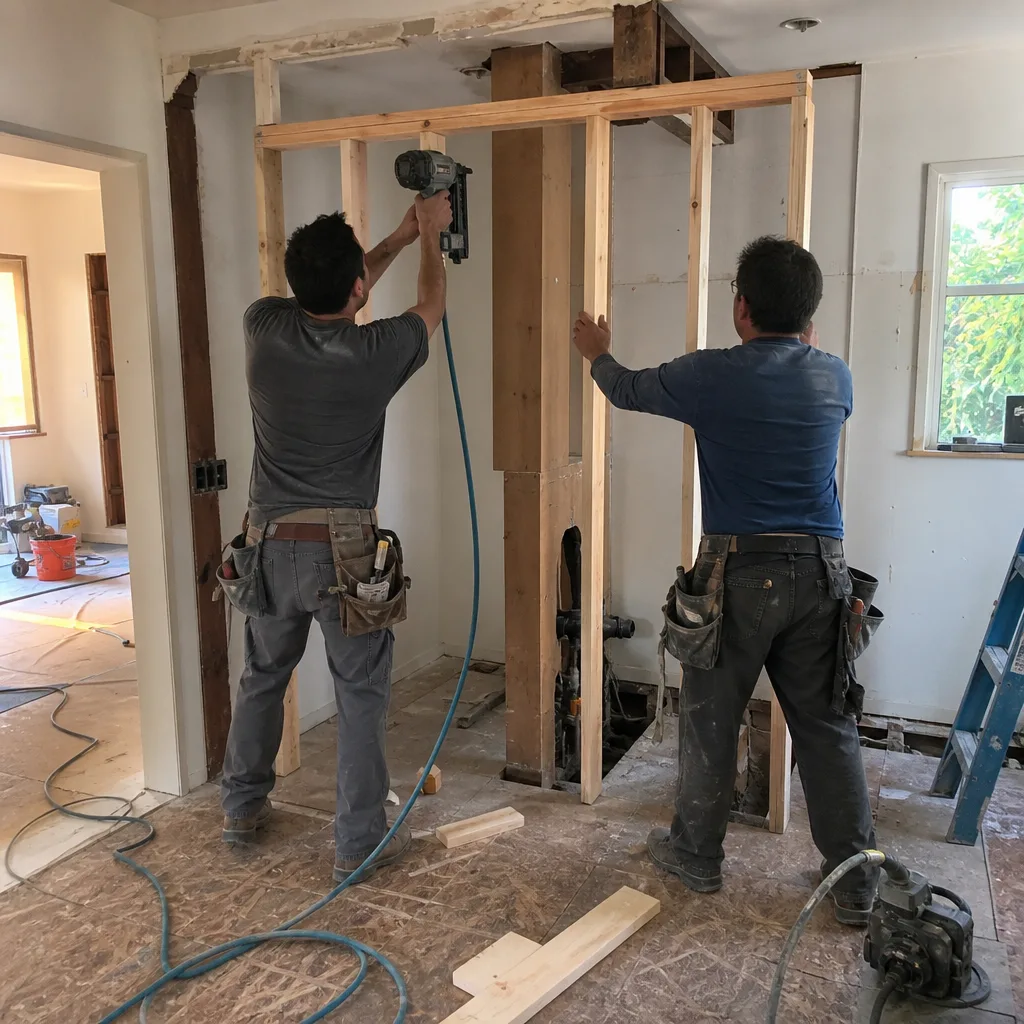
- Skipping the CSLB check because the contractor “seems nice.” Personality is not a credential. In Carlsbad’s competitive market, the contractors who invest in rapport sometimes invest less in documentation. Verify first, like second.
- Accepting a “verbal ballpark” as a binding estimate. California law requires written contracts over $500 for a reason. Verbal numbers have no enforcement mechanism and almost always increase.
- Comparing bids without normalizing scope. The lowest bid often wins by omitting necessary work, not by efficiency. The normalization method in this guide prevents this error.
- Neglecting to check references for projects over $50,000. Small project references do not predict large project performance. The administrative and financial demands scale non-linearly.
- Failing to document pre-existing conditions. Photograph every wall, floor, and fixture before work starts. In Carlsbad’s older neighborhoods like the Barrio, pre-existing cracks, settling, and moisture damage are common. Without documentation, disputes about whether damage existed before or after construction are unresolvable.
- Ignoring the change order clause until changes arise. By then, you have no leverage. Review and understand this clause before signing, when you can still negotiate or walk away.
- Hiring based on the lowest normalized bid without considering process documentation. A contractor who documents thoroughly, communicates clearly, and follows signed procedures may cost 5% more upfront and save 15% in avoided disputes and rework.
When to Call a Professional
Certain projects in Carlsbad require licensed contractors by law: any work over $500 in value, all structural modifications, electrical panel work, gas line modifications, and roofing in fire-hazard zones. Even where DIY is legally permitted, the interaction of coastal moisture, expansive soils, and strict energy code compliance makes professional execution the practical choice for most homeowners.
If your project involves multiple trades, permit requirements, or structural evaluation, the verification process in this guide will help you select a contractor with documented competence. Rowan Construction Group Carlsbad offers free estimates in Carlsbad, and we provide a written price before any work starts, every time, on every trade. Call (858) 815-9080 to schedule your free estimate. We also offer a Free Second Opinion on any written estimate from another contractor, reviewed line by line at no charge.
Frequently Asked Questions
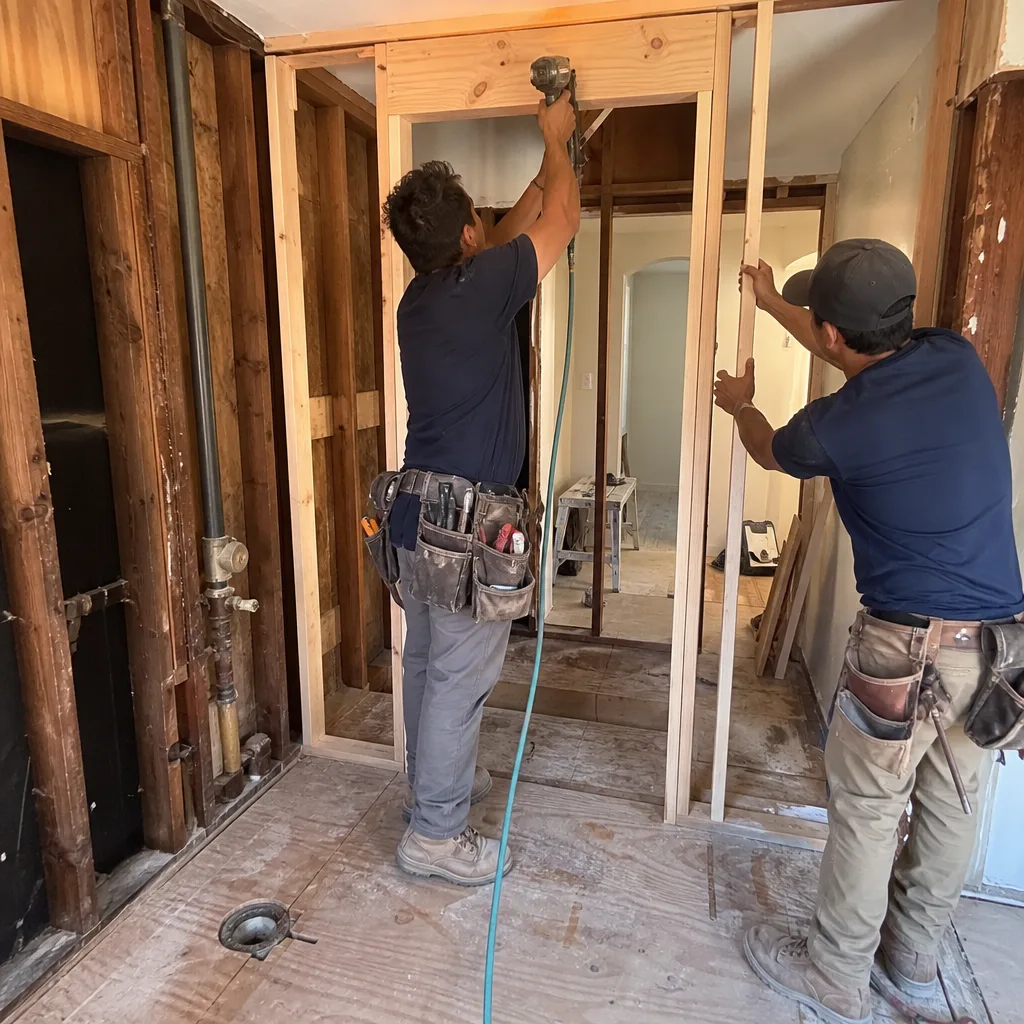
A mid-range kitchen remodel in Carlsbad typically runs $75,000-$125,000 including cabinets, countertops, appliances, and permit fees, while a full-gut renovation with layout changes can reach $150,000-$200,000. Costs run higher than inland San Diego County due to coastal moisture requirements, stricter energy code compliance, and longer permit timelines. Call (858) 815-9080 for a written estimate with line-item pricing, estimates are free.
Plan on 8-12 weeks for ADU and home addition permit review in Carlsbad, with an additional 2-4 months if Coastal Development Permit review is required for properties in the coastal zone. Expedited review is available for a fee but does not eliminate documentation requirements. A contractor who promises significantly faster timelines is likely planning to start without permits or does not understand local process.
The price should not change for work within the written scope. Changes occur only for conditions outside the scope or for owner-requested modifications, and only with a signed change order before work proceeds. At Rowan Construction Group Carlsbad, no change proceeds without a signed change order, this is Clause 1 of The Haven Standard and the reason our projects finish within a few percent of the agreed price. Ask any contractor to explain their change order process in detail before signing.
The contract should explicitly state who obtains permits and pays fees. Most legitimate contractors include permit handling in their scope, as they understand the inspection schedule and code requirements. In Carlsbad, where fire-hardening and coastal zone requirements add complexity, contractor-handled permitting reduces homeowner error risk. Verify this is included in your written estimate, not assumed.
Verify workers’ compensation and general liability through the CSLB license lookup and by requesting certificates of insurance directly from the contractor’s insurance broker. The certificate should name your property address and show coverage dates spanning your project timeline. Do not accept a photocopied or emailed certificate without verifying it with the broker, certificates can be altered.
Decline. California law requires home improvement contracts over $500 to be in writing, and cash payments eliminate your paper trail for disputes, warranty claims, and tax documentation. A contractor insisting on cash may be avoiding workers’ comp premiums, sales tax, or reporting income. This is a disqualifying red flag, not a negotiation point.
The Bottom Line
Hiring a contractor in Carlsbad is a documentation exercise, not a trust exercise, and you can find more guides & resources on our blog. The four-hour verification process, CSLB license and bond confirmation, written estimate normalization across three bids, reference checks for schedule and cost variance, and change order clause review, eliminates most high-risk contractors before you sign. The remaining candidates will have current licenses, active insurance, written scopes with named materials, documented change procedures, and references who can cite specific numbers. From that qualified pool, select based on communication clarity and documentation discipline. The contractor who shows their work before the job starts is the contractor who finishes within the number you agreed to.
Written by Grant Rowan, Owner at Rowan Construction Group Carlsbad, serving Carlsbad since 2007.